
Resources
How often to book high dusting, and what it covers
Vents, ledges, light fixtures, pipes and ductwork sit above the reach of a nightly crew. What counts as high dusting, the signs it is overdue and a realistic cycle for each kind of space.
Request a quoteCall (408) 668-0624
Where routine dusting stops
A nightly janitorial crew dusts what people touch and see at desk and counter height: workstations, sills, chair rails, picture frames and the tops of low cabinets. Most routine task lists stop somewhere around door height, because anything higher needs extension poles, ladders or a lift, plus time to move furniture and cover what sits below.
High dusting is the planned pass that picks up everything above that line. It is periodic work, booked on a calendar like floor refinishing or carpet extraction, rather than part of the nightly routine. Treating it that way matters when you write the cleaning plan or compare bids, because a task list that says “dust all surfaces” almost never means the tops of the light fixtures.
The surfaces on a high dusting list
The list changes with the ceiling. In a typical office with a drop ceiling, the overhead work is modest. In a warehouse, a gym or a loft office with exposed structure, it can be the largest surface area in the building. A full walk usually turns up these items:
- Supply diffusers and return-air grilles, plus the ceiling tiles around them.
- Light fixtures, lenses, pendant lights and the tops of fluorescent or LED housings.
- Exposed ductwork, pipe runs, conduit and cable trays.
- Beams, joists, trusses and the tops of columns.
- High ledges, soffits, window heads and the tops of partitions.
- Hanging signs, banners, speakers, cameras and exit signs.
- Sprinkler pipes and escutcheons, dusted gently and never wiped wet.
Write each one into your task list with its rough height. That single detail tells a bidder whether the job calls for poles, ladders or a lift, and it keeps the quote honest.
Why overhead dust is worth the trouble
Overhead dust is easy to ignore until it falls. Air movement from the HVAC system, a door opening in a breeze or a forklift passing under a rack loosens it, and it lands on desks, shelves, merchandise and freshly finished floors. In a retail store or a showroom, that means dull product and fixtures. In a warehouse, it means a film on stock and packaging.
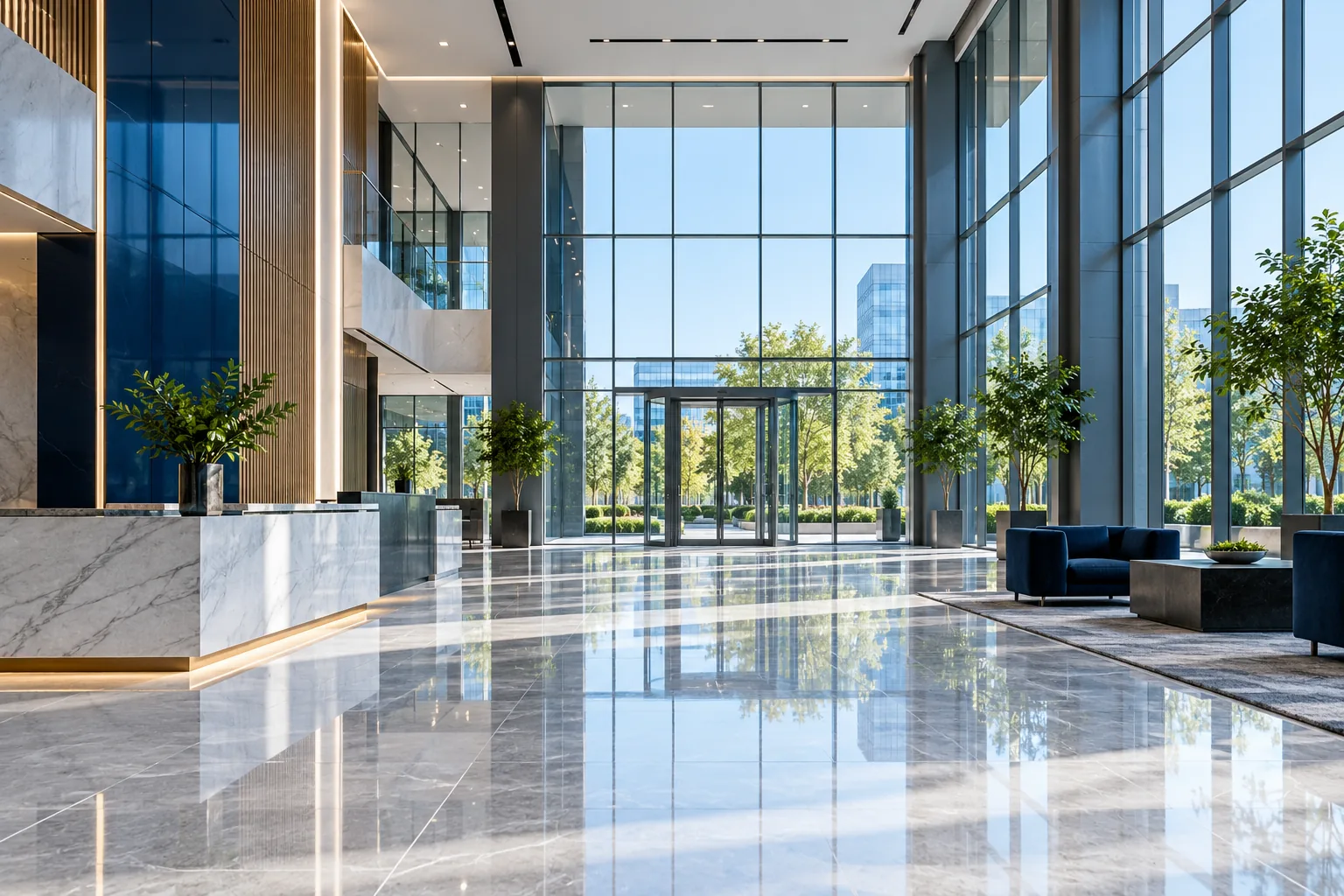
Appearance is the other reason. Dust on light lenses dims a room, and streaks around diffusers make clean ceiling tiles look stained. In a tall lobby or atrium, daylight shows every layer on the ledges, so a space that is spotless at floor level can still look neglected to anyone who glances up.
There is a practical side as well. A film on camera domes softens the picture your security team relies on, dusty skylights and clerestory glass let in less daylight, and grimy occupancy sensors and speaker grilles make a building feel older than it is. These small items rarely appear on a nightly checklist, so the periodic overhead pass is the one time they get attention.
How often each kind of space needs it
The cycle follows two things: how much open structure the space has and how much activity happens below it. These are common starting points, adjusted after the first visit shows how fast the dust returns:
- Busy retail floors, food courts and showrooms: quarterly.
- Warehouses and distribution buildings with open ceilings: quarterly in active areas, twice a year in quiet storage zones.
- Gyms, studios and dealership showrooms with exposed structure: quarterly.
- Office lobbies and atriums: every three to six months.
- Enclosed offices with drop ceilings: once or twice a year, with diffusers checked more often.
Spaces with dust-making activity of their own, such as cardboard handling, cutting or packing lines, sit at the short end. A building near an active construction site or a gravel lot does too. When in doubt, look at a diffuser a month after the visit; if the gray ring is already back, shorten the cycle.
Signs it is overdue
You don’t need a ladder to tell when overhead dust has built up. Walk the space with these questions in mind:
- Are there dark rings or streaks on the tiles around supply diffusers?
- Do light lenses look gray or yellowed, or are dead insects visible inside them?
- Can you see dust strings hanging from ductwork, beams or cable trays?
- Do desks, shelves or freshly cleaned floors pick up a film within a day or two?
- Do signs and speakers look duller than the walls around them?
Any two of those usually mean the space is past due. Book the first visit as a heavier catch-up pass and set the cycle from there.
Slowing the dust down between visits
High dusting removes what has built up, but the rate it comes back is something you can influence. Most overhead dust starts at floor level or in the air handling system, so the steps that help happen there. Walk-off mats at every entry trap grit before foot traffic grinds it into fine dust. Dock doors and roll-up doors left open for hours let in dust from lots and yards, so closing them between loads makes a visible difference in a warehouse.
Air filters matter as well. A loaded or poorly fitted filter lets more dust circulate and settle on diffusers and fixtures. Changing filters on a regular cycle, and replacing missing or broken ceiling tiles that let dust drop from the plenum, keeps the overhead surfaces cleaner for longer. Our facility maintenance service handles HVAC filter changes and ceiling tile swaps, which fit neatly alongside a high dusting cycle.
Planning the visit
High dusting is noisy, slow work that needs room to move a lift, so it is almost always scheduled after hours or on a weekend. Before the visit, agree on the areas, the order of work and what gets covered: desks, merchandise, open stock and equipment below the work zone. Settle lift access ahead of time, including door widths, floor load limits on mezzanines and any approval your building needs.
Work moves top to bottom, so the floor goes last. Booking high dusting right before a floor care visit means anything that falls is picked up in the same project, and pairing it with window and detail cleaning finishes the space at every height. Continental Facilities plans high dusting as part of the same calendar as the nightly program, so overhead work never drops off the schedule.
To set a cycle for your building, request a quote and we will walk the space with you and note every overhead surface and its height.
A few useful answers
Common questions.
How is high dusting different from the nightly dusting?
Regular dusting covers surfaces within easy reach during the nightly clean. High dusting is a periodic project for everything above that, from diffusers and fixtures to beams and ductwork, and it needs poles, ladders or a lift.
Can high dusting be done while people are working?
Light work with extension poles in a quiet corner can happen during the day, but most visits run after hours. Lifts, falling dust and covered work areas are hard to manage around staff, shoppers or members.
Should high dusting come before or after floor work?
Before. Dust and debris fall during the work, so finishing overhead first lets the floor crew pick everything up and leave a clean, burnished floor behind.
How long does a high dusting visit take?
A lobby or a single office floor usually fits into one evening. A large warehouse or a building with a lot of exposed structure is split into zones and worked over several nights or a weekend, finishing each zone before the next one starts.
Can high dusting join an existing cleaning plan?
Yes. Continental Facilities adds high dusting to your plan as scheduled periodic work, on the same calendar and with the same point of contact as your janitorial and floor care.