
Resources
Lobbies, elevators and stairwells in multi-tenant buildings
Every tenant and visitor passes through the same lobby, cabs and stairs. What these shared spaces need, how often, and how to keep them right through move-ins and busy mornings.
Request a quoteCall (408) 668-0624
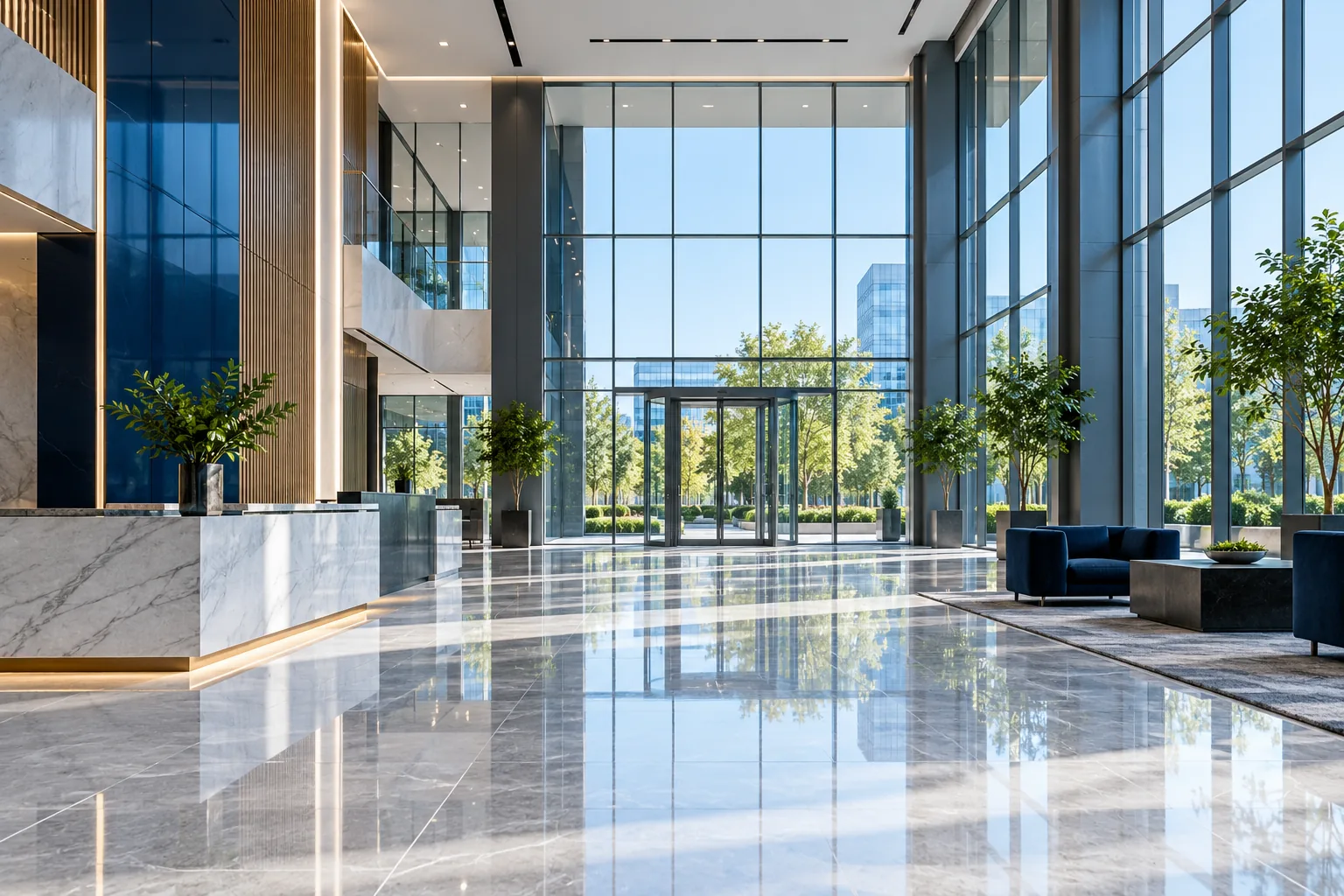
The shared spaces tenants judge you by
In a multi-tenant building, each tenant usually looks after its own suite, but the lobby, elevators, stairwells and corridors belong to the building. Those common areas are the part of the property every tenant, visitor and prospective tenant sees, and they shape how people feel about the whole address long before anyone reaches a suite door.
They also wear differently from office space. Traffic funnels through a handful of doors, cabs and landings, so dirt, fingerprints and scuffs concentrate in small areas. A common-area plan treats them as their own zone, with tasks and frequencies set for the traffic they actually carry rather than borrowed from the suite schedule.
The lobby, from mat to directory
The entry does the heaviest work. Walk-off mats trap grit before it reaches the main floor, so they are vacuumed nightly and lifted on a regular basis to clean the floor underneath. Door glass, push bars and handles are cleaned every night, and the inside of the vestibule gets the same attention as the lobby itself. Directory boards, mailbox fronts, the reception or security counter, seating and planters are dusted and wiped on each visit.
Lobby floors are often stone, terrazzo or polished tile, which look their best with nightly dust mopping and damp mopping plus a periodic machine scrub and polish. Carpeted lobbies need nightly vacuuming with attention to the path from the door to the elevators, where wear shows first. See floor care for the periodic side of that work.
During the day, a busy lobby benefits from a porter loop: a pass at opening, another after the lunch rush and one before the evening exit, picking up litter, wiping glass and handling spills before they spread. A day porter covers that loop alongside the restrooms and other shared areas.
Elevator cabs and landings
An elevator cab is a small room that a steady stream of hands touches all day. A typical nightly routine wipes the car operating panel and call buttons, cleans the handrails, cleans mirrors and glass, wipes the walls and doors, and vacuums or mops the floor. Stainless steel and brushed metal panels are cleaned with the grain and polished on a weekly cycle in most buildings, with a nightly touch-up of the spots people lean on.
The door sill tracks collect grit, gravel and dropped items. Vacuuming the tracks keeps the doors looking cared for, and anything stuck in a track or any damaged panel goes to the elevator maintenance contractor rather than the cleaning crew. Landings on each floor get the same detail: call buttons, door frames, the floor in front of the doors and any furniture or artwork in the landing.
Freight and service elevators need a plan of their own. They take the abuse of deliveries and moves, so their floors, walls and protective pads are cleaned on a schedule that matches the building’s move and delivery calendar.
Stairwells, top to bottom
Stairwells are easy to neglect because few people use them on an ordinary day. That is exactly why they show dust, cobwebs and litter when someone finally does. Crews work from the top floor down, sweeping or dust-mopping each tread and landing, so debris moves in one direction and nothing is dragged back up. Treads and nosings are damp-mopped, handrails are wiped end to end, and doors, push bars and wall surfaces near the doors are spot cleaned.
Frequency follows use. Stairs that tenants use daily between floors get nightly attention, much like a corridor. Exit stairs that see little traffic usually need a weekly sweep and rail wipe, with high dusting of light fixtures and upper walls on a periodic cycle. Crews report anything stored on a landing, a light that is out or a door that doesn’t close properly to the property team.
Corridors on the tenant floors
Between the elevator landing and each suite door runs a corridor that belongs to everyone and no one. Tenants walk it twice a day, deliveries roll through it, and it is often the first thing a visitor sees after the elevator doors open. Nightly service covers trash at the landing, carpet or hard-floor care along the walking path, and spot cleaning of walls, door frames and suite entry glass.
Drinking fountains, wall-mounted signage, fire cabinet glass and corridor light switches get wiped on a weekly round. Watch the corners where corridors meet the landing: carts and chairs scuff the walls there, and those marks are worth reporting for touch-up paint rather than scrubbing away layer by layer.
A sample common-area schedule
Every building’s plan is different, but most multi-tenant properties land somewhere close to this:
- Nightly: lobby floor, entry glass and door hardware, mats, elevator cab interiors, call buttons on every landing, corridor trash and spot cleaning, busy interior stairs
- Weekly: stainless polish in cabs and on landings, low-traffic stairwell sweep and rail wipe, elevator sill tracks, corridor baseboards
- Monthly or quarterly: lobby floor machine scrub and polish, carpet extraction in corridors, high dusting of lobby fixtures and stairwell lights
- Daytime: porter loops through the lobby, elevators and restrooms at peak times
Write the schedule floor by floor, so it is clear which corridors and landings are in the base-building plan and which sit inside a tenant’s suite. The office cleaning frequency standards guide covers the suite side of the same building.
Planning around moves, events and weather
Tenant moves are the hardest days on common areas. Schedule moves through the property office, hang protective pads in the elevator, lay floor protection from the dock or entry to the elevator, and book a cleanup in the lobby, cab and affected corridor as soon as the move finishes. The same goes for building events and large deliveries.
Weather adds its own load. On wet days, extra mats at the entry and an additional porter pass through the lobby and cabs keep tracked-in water and grit from spreading upstairs. Continental runs porter coverage, nightly cleaning and floor care for shared spaces under one plan, so the lobby, cabs and stairs follow a single schedule. Request a walkthrough and we’ll map the common areas with you.
A few useful answers
Common questions.
How often should elevator cabs be cleaned?
Nightly in most occupied buildings, covering buttons, rails, mirrors, walls and the floor, with stainless polishing and sill-track vacuuming on a weekly cycle. Busy buildings add a daytime porter pass at peak times.
Who cleans the stairwells in a multi-tenant building?
Usually the building’s own cleaning program, because stairwells are common areas. Stairs inside a single tenant’s space, such as an internal stair between two floors of one suite, are often part of that tenant’s cleaning instead.
How should cleaning change during a tenant move?
Protect the route before the move, clean it as soon as the move ends, and check the elevator pads, cab walls and lobby floor for damage. Schedule the cleanup at the same time the move is booked.
Do lobby floors need more than nightly mopping?
Yes. Nightly dust mopping and damp mopping handle the daily grit, but stone, terrazzo and tile lobbies also need a periodic machine scrub and polish, and carpeted lobbies need regular extraction along the main walking paths.
Services