
Services
Eco-friendly commercial cleaning
Eco-friendly commercial cleaning is a janitorial program built to use less product, water, plastic and energy while keeping the building just as clean, for facility and property managers with sustainability goals. Continental sets it up at the walkthrough and runs it every visit as part of your regular service.
Request a quoteCall (408) 668-0624
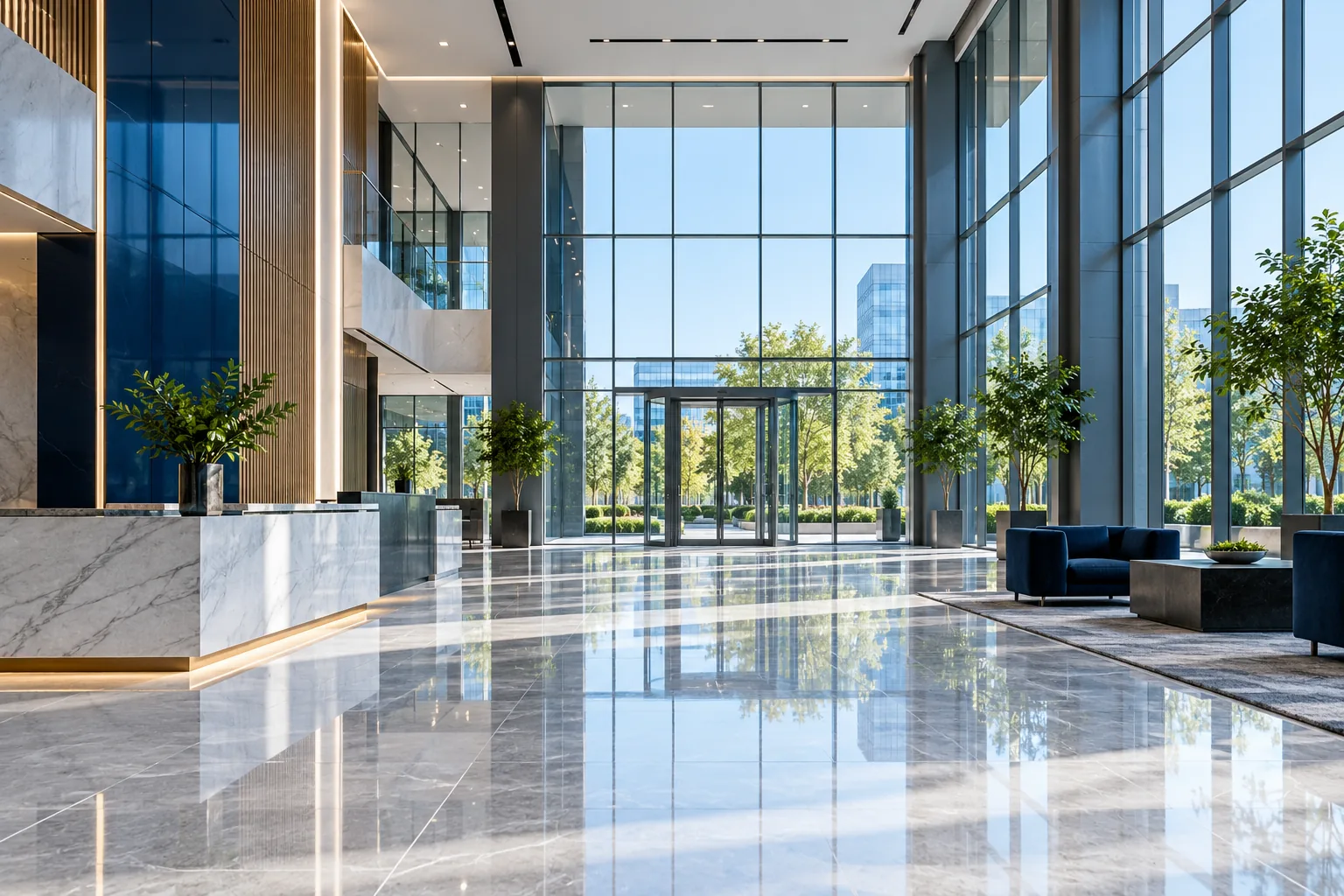
What changes in an eco-friendly program
An eco-friendly program changes the products, the tools and the crew’s habits, while the standard of clean stays the same. Crews use concentrated products mixed through measured dilution systems, so every bottle holds the right strength and nothing is wasted on guesswork. Microfiber cloths and flat mops replace cotton rags and string mops; they pick up more dust with less solution and are washed and reused instead of thrown away.
Vacuums carry HEPA filters, which hold fine dust in the machine instead of blowing it back into the room. At the end of the night, the last crew member on each floor switches the lights off, a small habit that adds up over a year of cleaning. Each of these choices sits inside your janitorial services, so the eco-friendly program is the nightly program, not an add-on.
Less water and less waste
Carpet care is one of the thirstiest jobs in a cleaning program, so an eco-friendly plan leans on low-moisture methods. Encapsulation between deep extractions uses far less water, dries quickly and keeps traffic lanes even, which stretches the time between full extractions. Our comparison of extraction and encapsulation shows where each method fits.
Restrooms move to refillable soap and sanitizer dispensers and to paper choices that cut waste, such as high-capacity rolls and controlled-dispense towels. Fewer half-used rolls end up in the bin, and restocking takes fewer trips. Our janitorial supplies service can carry those products, so the dispensers and the refills match.
Recycling and compost, sorted the way your building does
Crews empty recycling and compost bins into the building’s own collection streams and keep each stream separate from the desk to the loading dock. When a bin arrives contaminated, the crew notes it, and repeat problems are flagged so your team can fix signage or bin placement.
Liners are sized to each bin and changed when soiled or full, so clean liners stay in service instead of going out with every pickup. For buildings that track diversion, the crew’s notes give your sustainability lead a clear record of how each stream is handled.
Stopping soil at the door
Much of the dirt inside a building walks in on shoes, so good entry matting is one of the easiest ways to clean less. Mats inside and outside each entrance trap grit before it reaches carpet and hard floors, which means fewer deep cleanings, less product and longer floor life.
Crews vacuum and service the mats more often than any other floor surface, and the walkthrough checks whether each entrance has enough mat length for its traffic. In wet or dusty seasons, mat service steps up before the soil spreads down the corridors.
Setting the program to your sustainability goals
Every eco-friendly program starts at the walkthrough, where Continental reviews your building’s sustainability goals and what you report on. A building tracking waste diversion needs clean, well-sorted streams. One focused on water or energy needs low-moisture carpet care and a firm lights-off routine. A tenant with its own commitments wants to know exactly which products are used in its suite.
Those goals go into the written scope: the products and dilution rates, the tools, the dispenser and paper choices, the waste streams and the end-of-night routine. Crews follow that scope on every visit and supervisors check it during quality inspections, so the program you approve is the program that runs. Product lists and safety data sheets stay on file for your reporting, organized the way our SDS binder kit lays them out.
Eco-friendly cleaning alongside disinfection
An eco-friendly program and disinfection work side by side. Everyday surfaces are cleaned with general-purpose products and microfiber, and disinfectants go where a space needs them: restroom fixtures, door handles, elevator buttons, break-room counters and any room with a higher hygiene need.
When a disinfectant is used, crews mix it to the right strength and leave it wet for the full contact time on the label, so a measured amount does the job. Our disinfection and sanitizing service sets that schedule for the spaces that call for it.
What shapes the cost of an eco-friendly program
An eco-friendly program is priced the same way as any janitorial program: the building’s size, how many nights a week it is cleaned, how much of the floor is carpet versus tile or concrete, the restroom count, any dispenser and paper changes and the number of waste streams to sort. The written quote lists each product and method choice, so you can see what the program includes and where the cost sits.
Continental’s own crews run eco-friendly programs across Northern California and northern Nevada, from the Bay Area and Sacramento to Reno and Carson City. Book a walkthrough and bring your goals.
A few useful answers
Common questions
Does eco-friendly cleaning clean as well as a standard program?
Yes. The same checklist and standard of clean apply; what changes is the products, tools and habits the crew uses to reach it.
Can we keep disinfection in an eco-friendly program?
Yes. Disinfectants stay in the program for restrooms, high-touch points and rooms that need them, mixed to strength and left for the label’s contact time, while everyday surfaces get general-purpose products and microfiber.
Can your crews follow our recycling and compost streams?
Yes. Crews empty each bin into its matching collection stream, keep the streams apart and flag repeat contamination to your team.
Can we switch our current janitorial program to eco-friendly cleaning?
Yes. Continental reviews your current scope at a walkthrough, swaps in the eco-friendly products, tools and routines, and starts the new program on a date you set.
What can you provide for our sustainability reporting?
Product lists, dilution rates, safety data sheets and notes on how each waste stream is handled, kept on file and updated whenever the program changes.